





AML Compliance Solutions for DeFi Protocols
Protect your DeFi protocol from illicit activity with MistTrack's lightweight, API-first compliance tools. Screen wallets, detect high-risk addresses, trace stolen funds after exploits, and meet regulatory expectations — without compromising the decentralized user experience.
✓ No credit card required ✓ API from $20/year ✓ ISO certified
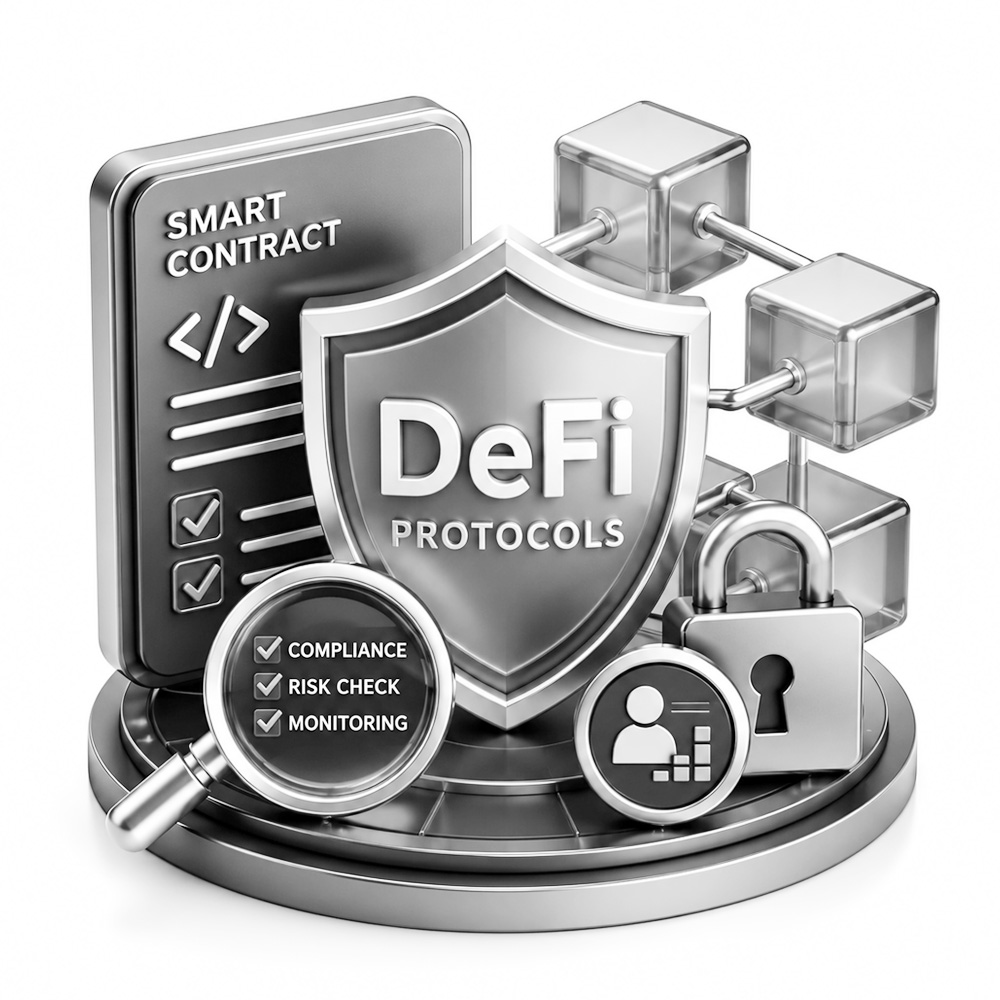
Compliance Challenges for DeFi
Navigating the evolving regulatory landscape while maintaining a permissionless, user-friendly experience is a delicate balance.
-
Regulatory Pressure on DeFi
Regulators worldwide are increasing scrutiny on DeFi. Protocols that fail to address AML concerns face enforcement actions, delistings, and restrictions on fiat on/off ramps.
-
Frontend Screening Needs
Even without controlling smart contracts, DeFi frontends can screen connected wallets. Identifying sanctioned or high-risk addresses at the interface level is the first line of defense.
-
Exploit & Hack Fund Detection
DeFi protocols are prime targets for exploits. When your protocol is attacked, you need tools to trace stolen funds, identify the attacker's wallets, and coordinate with exchanges to freeze assets.
How MistTrack Helps DeFi Protocols
API-first compliance tools that integrate seamlessly into your protocol's existing infrastructure.
-
Wallet Risk Scoring API
Screen connected wallets in real-time with our lightweight risk scoring API. Get instant risk scores with detailed risk category breakdowns. Minimal latency impact.
Standard Plan -
Address Labeling & Mixer Detection
Identify if a connected wallet is linked to known mixers (Tornado Cash, Railgun, etc.), sanctioned entities, darknet markets, or other high-risk categories from our 500M+ label database.
Standard Plan -
DEX & Bridge Parsing
Our Standard Plan includes parsing for DEX swaps and cross-chain bridge transactions, giving you visibility into complex DeFi transaction flows across protocols.
Standard Plan -
Real-Time Monitoring
Monitor known malicious addresses and receive alerts when they interact with your protocol. Essential for early detection of ongoing exploits or attacks.
Basic Plan -
Transaction Action Analysis
Understand what a wallet is doing: swapping, staking, bridging, providing liquidity. Behavioral analysis helps identify suspicious patterns and wash trading.
Standard Plan -
Post-Exploit Tracing
When your protocol is exploited, use our investigation tools to trace stolen funds across chains and identify cash-out points at centralized exchanges.
Standard Plan
Recommended APIs for DeFi Integration
Designed for lightweight, asynchronous integration — screen wallets with minimal friction.
| API Endpoint | Use Case for DeFi | Plan Required |
|---|---|---|
GET /v3/risk_score |
Screen wallets on connection — block or flag high-risk users at the frontend | Standard |
GET /v1/address_labels |
Identify if a wallet belongs to a mixer, sanctioned entity, or known attacker | Standard |
GET /v1/address_action |
Analyze wallet behavior: DeFi interactions, bridge usage, swap patterns | Standard |
POST /v2/risk_score_create_taskGET /v2/risk_score_query_task |
Queue wallet risk score tasks for periodic compliance audits | Standard |
GET /v1/address_counterparty |
Map the counterparty network of suspicious wallets to detect coordinated attacks | Standard |
All endpoints are available via our OpenAPI documentation.
Screen a Wallet on DeFi Frontend Connection
# Screen wallet when user connects to your dApp
curl -G https://openapi.misttrack.io/v3/risk_score \
  --data-urlencode "coin=ETH" \
  --data-urlencode "address=0x742d35Cc6634C0532925a3b844Bc9e7595f2bD18" \
  --data-urlencode "api_key=YOUR_API_KEY"

# Response — decide whether to flag or block at frontend
{
  "success": true,
  "msg": "",
  "data": {
    "score": 42,
    "hacking_event": "",
    "detail_list": [
      "Interact With High-risk Tag Address"
    ],
    "risk_level": "Moderate",
    "risk_detail": [
      {
        "entity": "Risk Entity",
        "risk_type": "mixer",
        "exposure_type": "indirect",
        "hop_num": 2,
        "volume": 7200,
        "percent": 5.8
      }
    ],
    "risk_report_url": "https://files.misttrack.io/riskReport/..."
  }
}
Integration Workflow
From API integration to incident response — a seamless compliance workflow for DeFi.
Integrate Risk API
Add our lightweight risk_score API call to your frontend wallet connection flow. Screen every wallet that connects to your dApp with minimal latency impact.
Lightweight integrationSet Risk Policies
Define your protocol's risk tolerance. Auto-block sanctioned addresses, flag high-risk wallets for review, and allow low-risk users through without friction.
Customizable rulesMonitor & Detect
Set up continuous monitoring for known attacker addresses. Receive instant alerts when suspicious wallets interact with your smart contracts.
Active defenseRespond to Incidents
If an exploit occurs, immediately trace stolen funds, identify cash-out points, and coordinate with exchanges to freeze assets using our investigation tools.
Incident response19 Blockchain Networks with DeFi Parsing
Full DEX, bridge, and DeFi protocol transaction parsing across all supported networks.
 Bitcoin
 Ethereum
 BNB Smart Chain
 TRON
TRON
 Polygon
 Solana
 Avalanche-C
 Arbitrum One
 OP Mainnet
 Base
Base
 zkSync Era
 Toncoin
 Litecoin
 Dogecoin
 Bitcoin Cash
 Merlin Chain
 IoTeX
IoTeX
 HashKey Chain
 Sui
Sui
Compliance That Fits DeFi
Start with the Developer Plan for API-only integration, or upgrade to Standard for full dashboard access and investigation tools.
Frequently Asked Questions
QWill MistTrack slow down my DeFi frontend?
No. Our risk_score API has sub-second response times and can be called asynchronously. Many protocols screen wallets in the background while the user interacts with the UI, adding zero perceptible latency.
QDoes this compromise decentralization?
MistTrack operates at the frontend/API layer — your smart contracts remain permissionless. You choose what actions to take based on risk scores, from simple flagging to frontend blocking.
QHow do we handle Tornado Cash and mixer exposure?
MistTrack's address label database identifies wallets that have interacted with Tornado Cash, Railgun, and other mixers. You can set custom policies for mixer-exposed wallets based on your risk appetite.
QCan MistTrack help after our protocol is hacked?
Yes. Our investigation tools are specifically designed for post-exploit tracing. Track stolen funds across chains, identify cash-out points at exchanges, and generate evidence packages for law enforcement cooperation. SlowMist's team also provides professional incident response services.
QWhat DeFi-specific transaction types does MistTrack parse?
MistTrack parses DEX swaps (Uniswap, PancakeSwap, etc.), cross-chain bridge transfers, liquidity pool interactions, staking, yield farming, and NFT transactions. Our Standard Plan includes full DeFi transaction parsing.
QDo regulators actually require DeFi protocols to have AML compliance?
Regulatory expectations are evolving rapidly. The EU's MiCA regulation, FATF updated guidance, and various national frameworks increasingly expect DeFi frontends to implement risk screening. Proactive compliance positions your protocol ahead of regulatory enforcement.
QHow does MistTrack help with post-exploit fund tracing?
When your protocol is exploited, MistTrack's investigation tools trace stolen funds through intermediate wallets, mixers, and cross-chain bridges. We identify cash-out points at centralized exchanges and generate evidence packages for law enforcement and exchange cooperation.
Explore Related Solutions
Crypto Exchanges
Automated deposit/withdrawal screening, real-time transaction monitoring, and sanctions detection for centralized exchanges.

Payment Platforms
Crypto payment risk assessment, merchant screening, and real-time transaction monitoring for payment processors.

Law Enforcement
Cryptocurrency crime investigation, fund tracing, address clustering, and evidence generation for law enforcement agencies.